Concrete repair: seal it, lift it or replace it
Not every crack needs a jackhammer. The right repair depends on whether the slab moved, how far, and why.
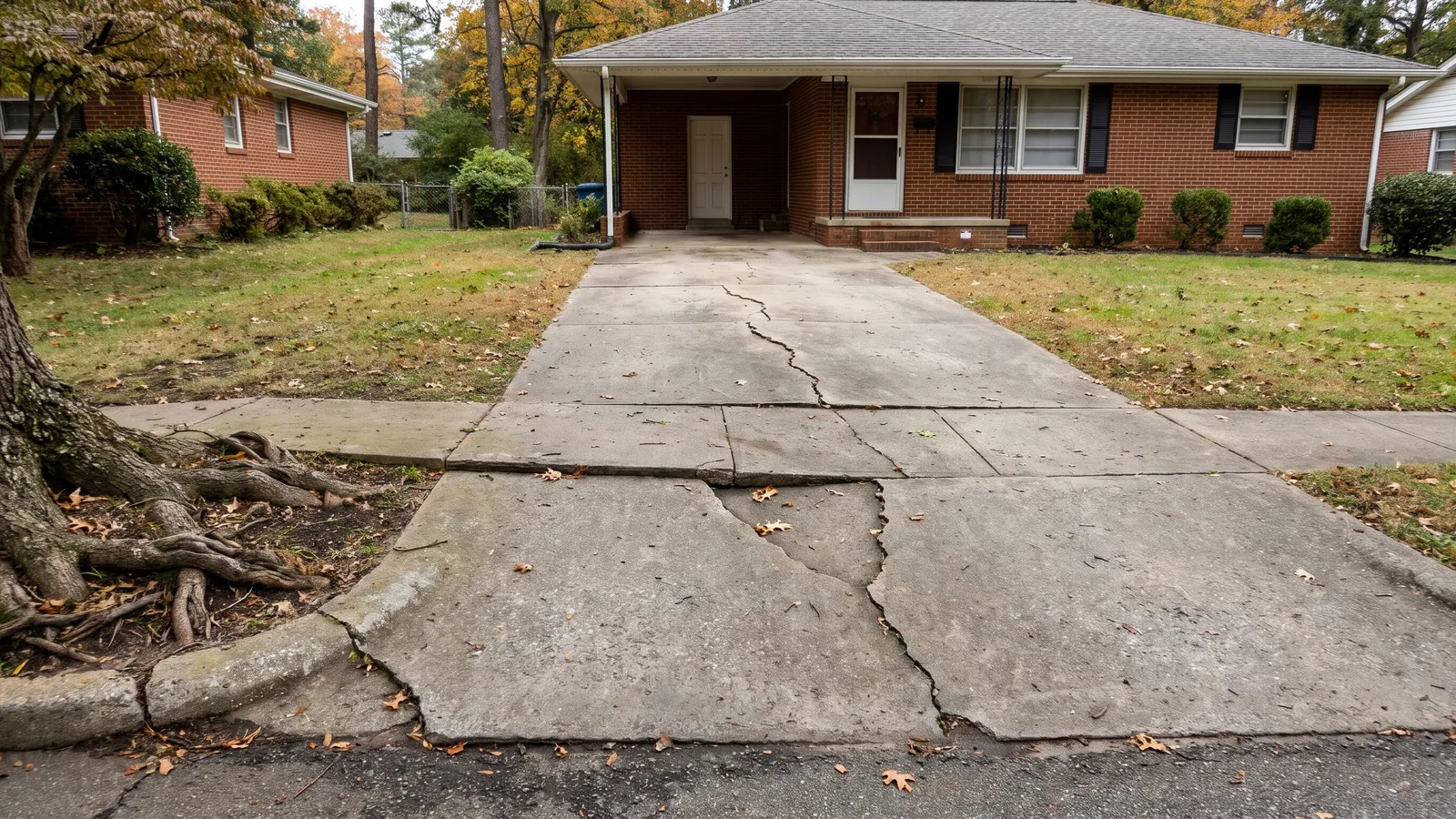
Three kinds of damage cover most repair calls. Cracks in an otherwise level slab, usually hairline to a quarter inch, often from shrinkage or a missing joint. Settled panels, where one section of a drive, walk or patio has dropped below its neighbor, usually because the soil underneath washed out or was never compacted. And heaved or broken sections, lifted by roots or shattered by a heavy load, where the slab itself is finished.
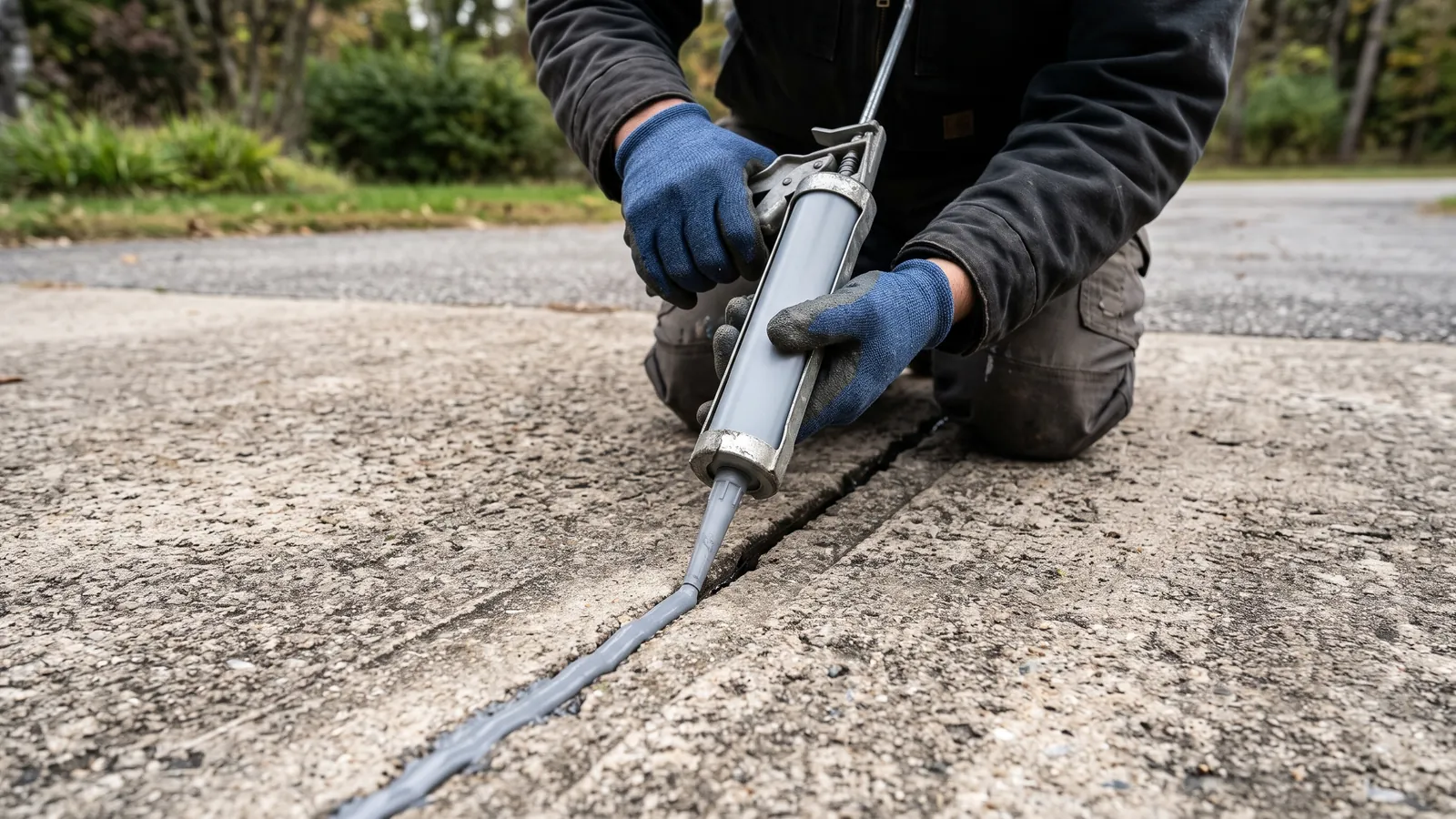
Cracks that have not moved can be cleaned and sealed. The contractor routs or cleans the crack, sets a backer rod in wider ones, and fills it with a flexible sealant that keeps water out of the base. It will not make the crack disappear, but it stops it from getting worse through water and ice.
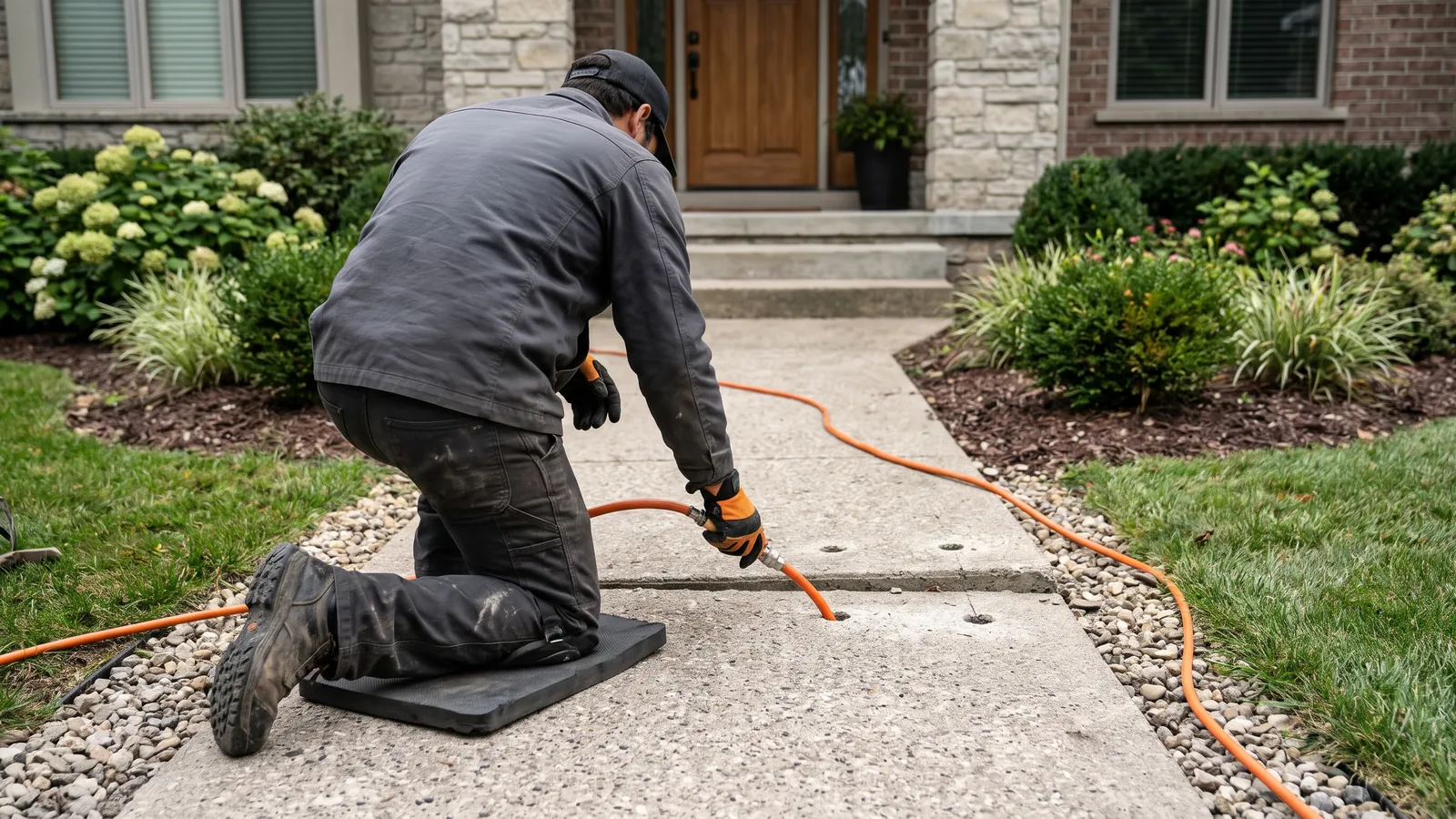
A settled panel that is still in one piece can often be lifted. Small holes are drilled through the slab and a material is pumped underneath to fill the void and raise the panel back to level. Mudjacking uses a cement slurry; polyurethane foam lifting uses expanding foam through smaller holes, costs more, and adds less weight. Both leave patched holes and both work only if the panel is sound.
When a panel is cracked into pieces, heaved by a root, or sinking because of a problem that will keep going, replacement is the honest answer: cut out the section at the joints, fix the base, deal with the root or the water, and pour a new panel doweled to its neighbors. The estimate should say which of the three it recommends, and why.
What the job covers
Diagnosis first
Why it cracked or sank: soil, water, roots or load.
Crack sealing
Cleaned, backer rod where needed, flexible sealant.
Slab lifting
Mudjacking or foam to raise sound panels back to level.
Trip edges
Small lifts ground down where that is enough.
Section replacement
Cut at the joints, base repaired, new panel doweled in.
Cause addressed
Downspouts, drainage or roots dealt with so it does not return.
Concrete repair cost
| Item | Planning range | Notes |
|---|---|---|
| Crack repair | About $250 – $800+ per crack | Extensive crack repair, priced per crack |
| Mudjacking | $3 – $6 per sq ft | Cement slurry lifting |
| Polyurethane foam lifting | $5 – $25 per sq ft | Smaller holes, lighter fill |
| Minimum visit for lifting | $200 – $700 | Common minimum charge |
| Sidewalk replacement | $1,300 – $2,600 | When lifting is not enough |
Planning ranges from published 2025–2026 cost guides, not quotes. See the full comparison on the repair cost page.
On the job
Concrete repair: questions people ask
Is a crack in my driveway a problem?
A hairline crack in a level slab is mostly cosmetic. Seal it if it is wider than a hairline, so water stays out of the base. A crack with one side higher than the other means the slab moved.
Mudjacking or foam?
Both lift sound slabs. Foam uses smaller holes and is lighter, and it costs more. The contractor will suggest one for your slab and soil.
Will a lifted slab sink again?
If the cause, usually water washing out the base, is fixed, lifting can last. If water keeps running under it, it can settle again.
Can you patch spalling on the surface?
Small surface flaking can be resurfaced, but the result rarely matches. If a large area is flaking, replacement is usually better.
Can you just grind a trip edge?
Yes, if the lift is small. It is the cheapest fix and leaves a visible ground patch.
Related: Repair cost · Concrete removal · Sidewalks and walkways
Free estimate: concrete repair
Name the job, give a phone number and the ZIP code of the property. A local concrete contractor comes out, measures, checks the slope and the ground, and writes the price down before anything is booked.
Estimates are free and there is no obligation to go ahead.