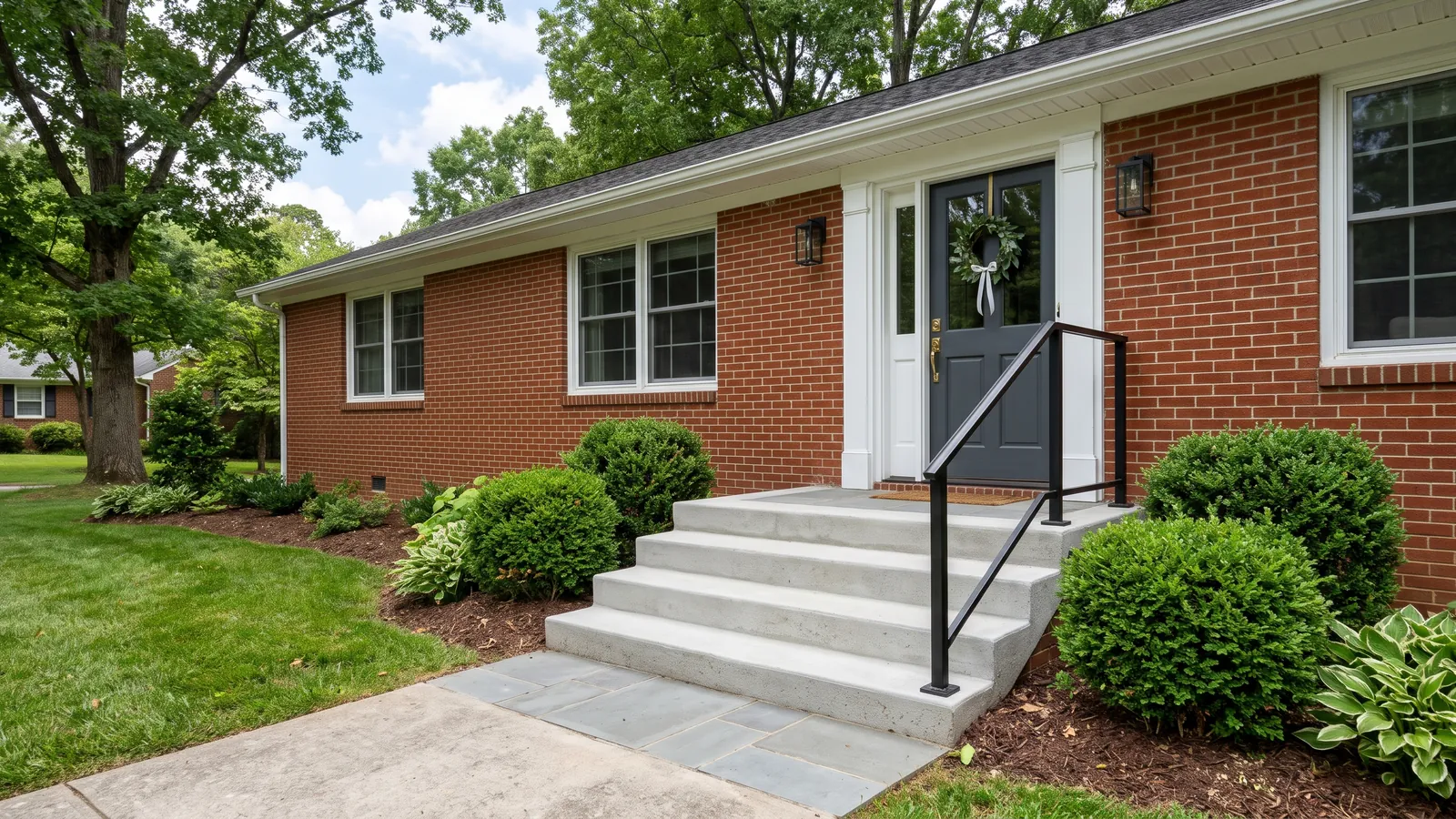
Concrete steps with even risers, a solid landing and a rail where it belongs
Uneven steps are the ones people trip on. New concrete steps are formed so every riser matches and the top landing gives you room to open the door.
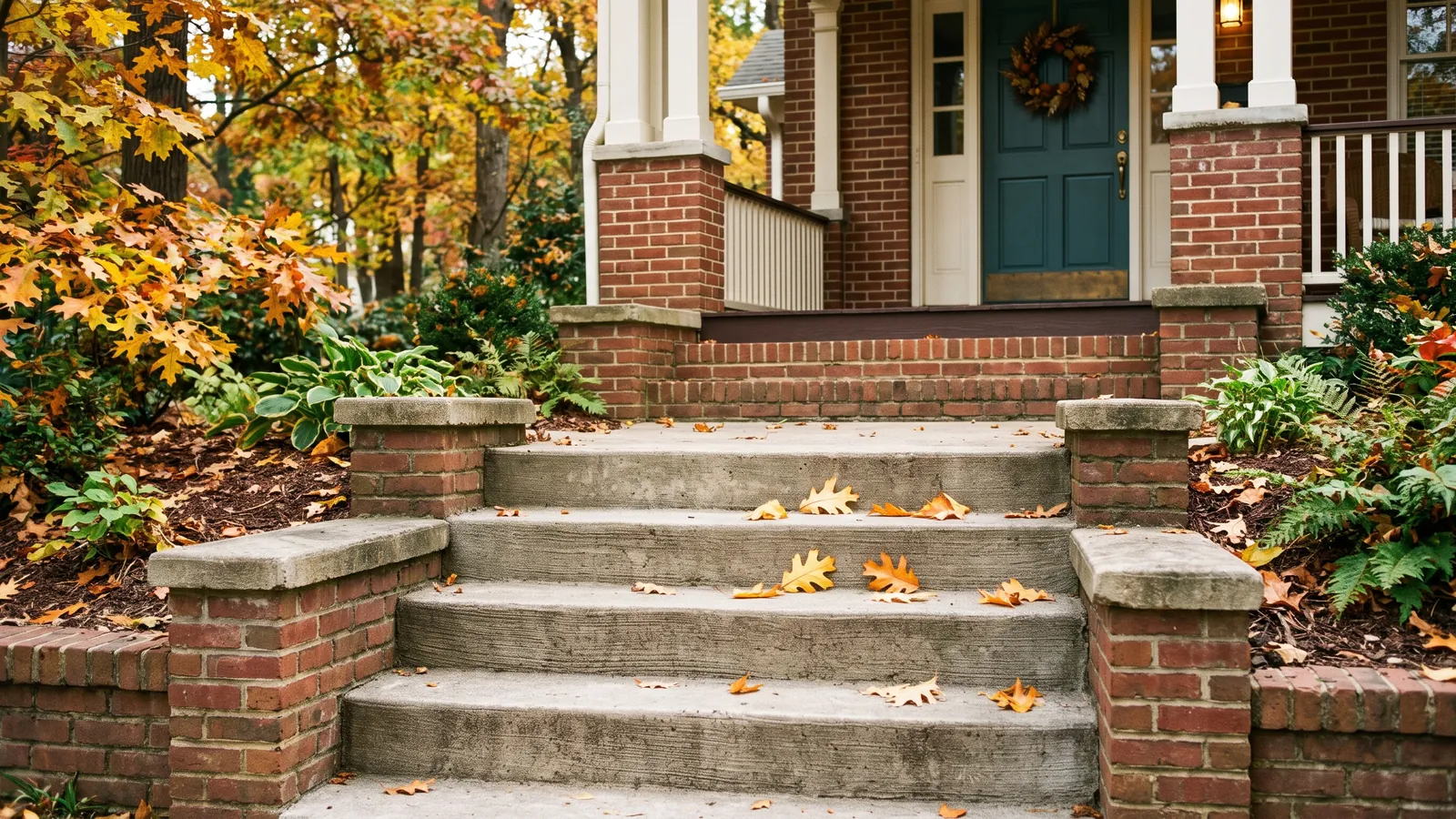
Front steps on older Raleigh brick ranches were often poured as a separate block against the foundation. Fifty or sixty years later, many have settled away from the house, tipped forward a little, or cracked where the walk meets the bottom tread. Back steps off a kitchen door tend to be smaller, steeper and built in a hurry.
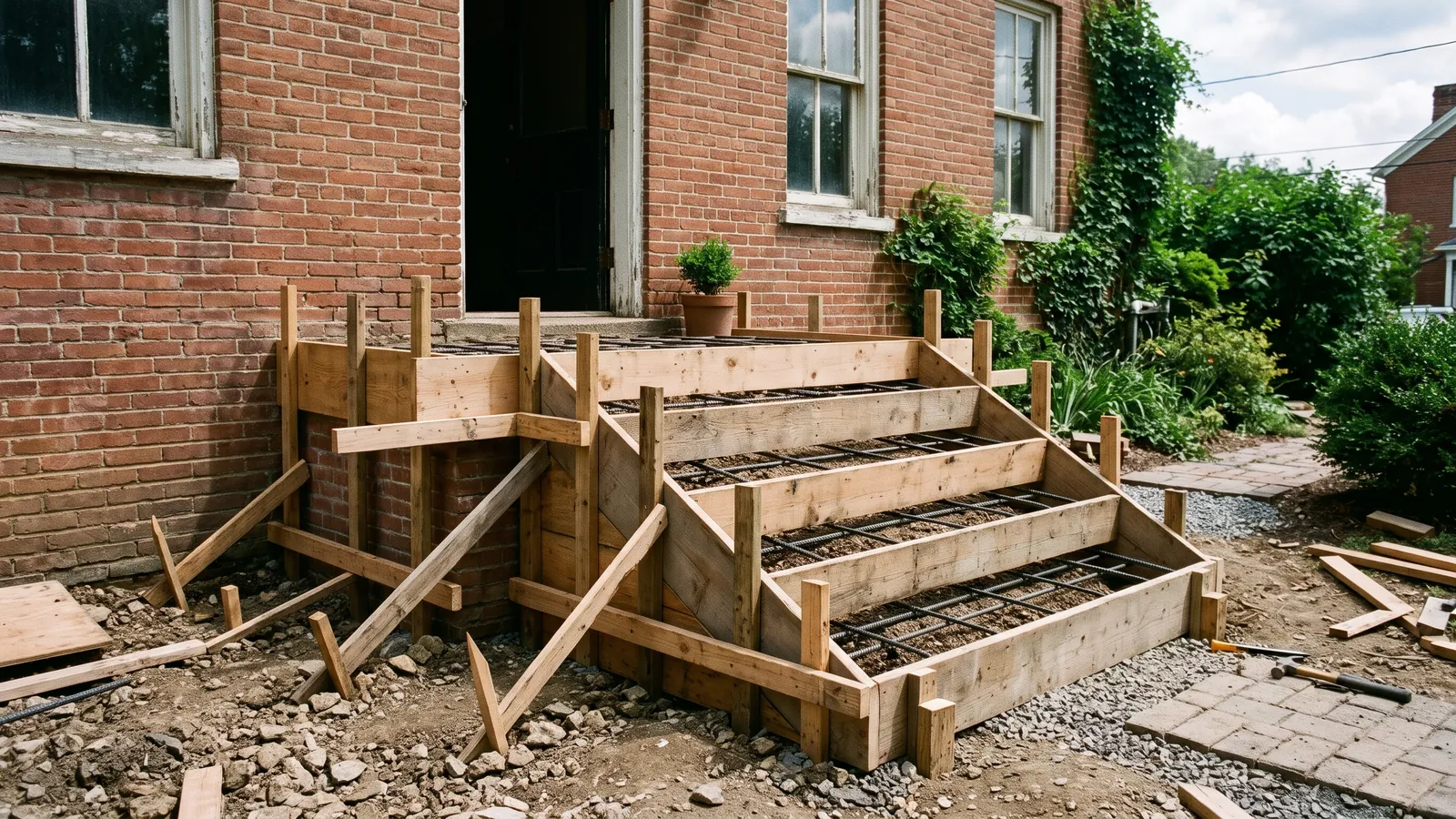
A rebuild starts by breaking out the old steps and checking what they sat on. New steps get a footing or a compacted base appropriate to their size, forms that set every riser to the same height and every tread to the same depth, and reinforcement tied in. The top landing is sized so you can stand on it with the storm door open. Where the steps meet the house, an isolation joint lets the two move separately.
Treads get a broom finish for grip, and the front edge, the nosing, is rounded so it does not chip. If there are enough steps to need a handrail, the rail mounts are set so the rail can be fastened securely; your town's building rules decide when a rail is required.
Sometimes the steps themselves are fine and the trouble is the walk that has sunk away from them. That is often a lifting or a one-panel replacement instead of new steps, covered on the repair page.
What the job covers
Old steps out
Broken out and hauled off, with the ground underneath checked.
Footing or base
Built to carry the steps without settling away from the house.
Even risers and treads
Every step the same height and depth, the landing sized for the door.
Reinforcement
Steel tied into the forms.
Grip and edges
Broom-finished treads, rounded nosings.
Rail-ready
Mounting set for a handrail where the steps need one.
How step pricing works
No dependable published range exists for new concrete steps, so this page does not give one. The written estimate depends on the number of risers, the width, the landing size, whether old steps have to be broken out, and whether a rail is added. If your steps are sound and only sunk, lifting them can cost far less: one guide puts a 40-square-foot set of steps at $200 to $400 for mudjacking and $300 to $800 for foam.
On the job
Concrete steps: questions people ask
My steps pulled away from the house. Can they be saved?
If the steps are in one piece and only settled, lifting them back up is sometimes possible. If they are cracked through or tipping, replacement is the better fix.
Can new steps match my brick?
The concrete itself is gray, but the steps can be faced or the risers finished to suit the house. Ask at the estimate.
How many steps need a handrail?
Your town's building rules set that. The contractor will tell you whether yours qualifies and set the rail mounts.
How long before we can use them?
Usually within a day or two for foot traffic, longer before anything heavy goes on them.
Can the walk and the steps be done together?
Yes, and they usually should be, so the bottom tread and the walk meet at the same level.
Related: Sidewalks and walkways · Concrete repair · Concrete removal
Free estimate: concrete steps
Name the job, give a phone number and the ZIP code of the property. A local concrete contractor comes out, measures, checks the slope and the ground, and writes the price down before anything is booked.
Estimates are free and there is no obligation to go ahead.