Front walks and side paths that stay flat under Raleigh's oaks
A walk is a narrow slab that takes foot traffic, roots and water. Width, joints and the base under it decide whether it stays level.
The most common walkway call we get is a trip edge: one panel of a front walk lifted an inch above the next by a root, or one panel sunk where a downspout drains next to it. The next most common is a new walk, usually from the driveway to the front door of a house that only ever had stepping stones.
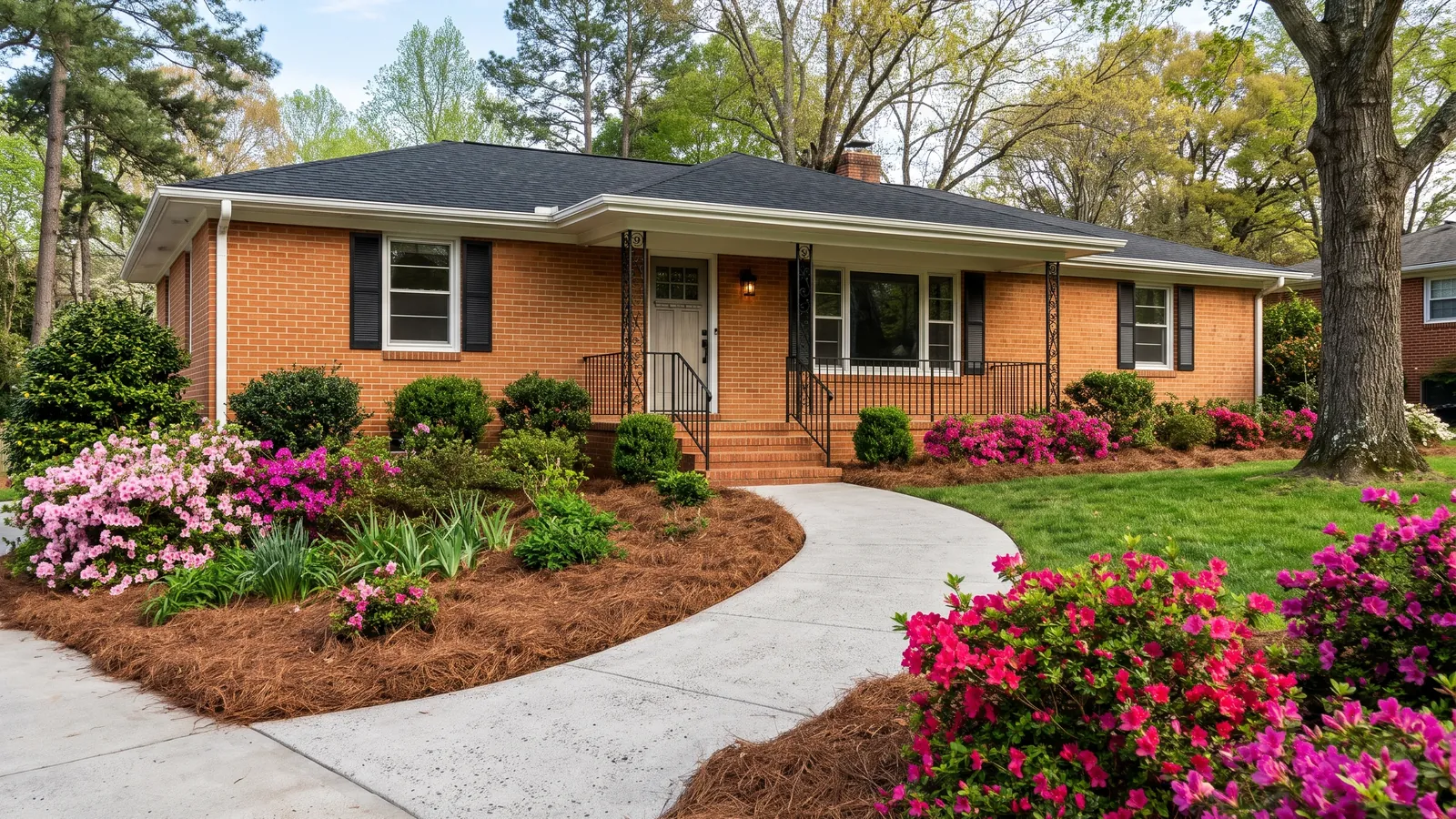
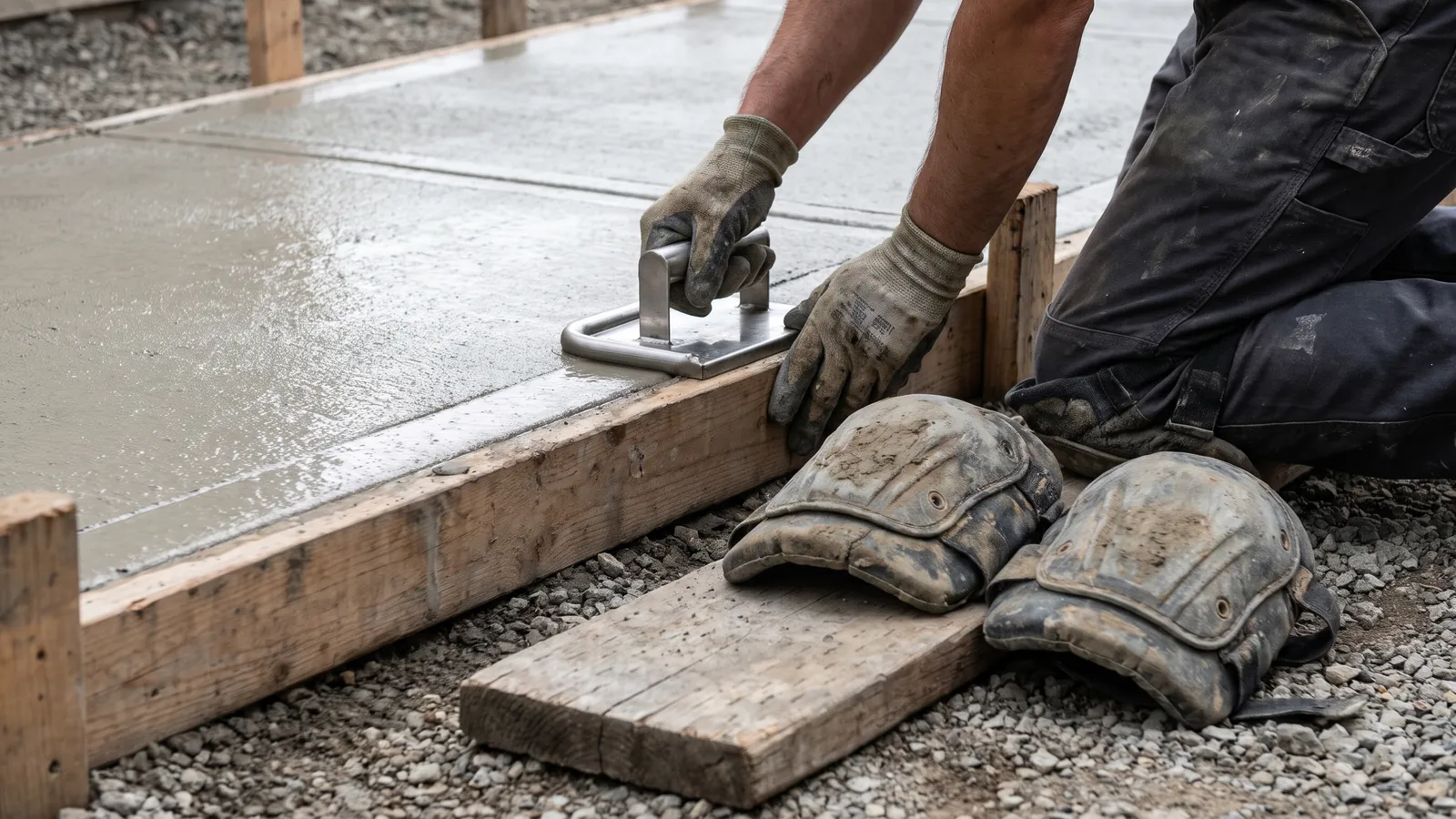
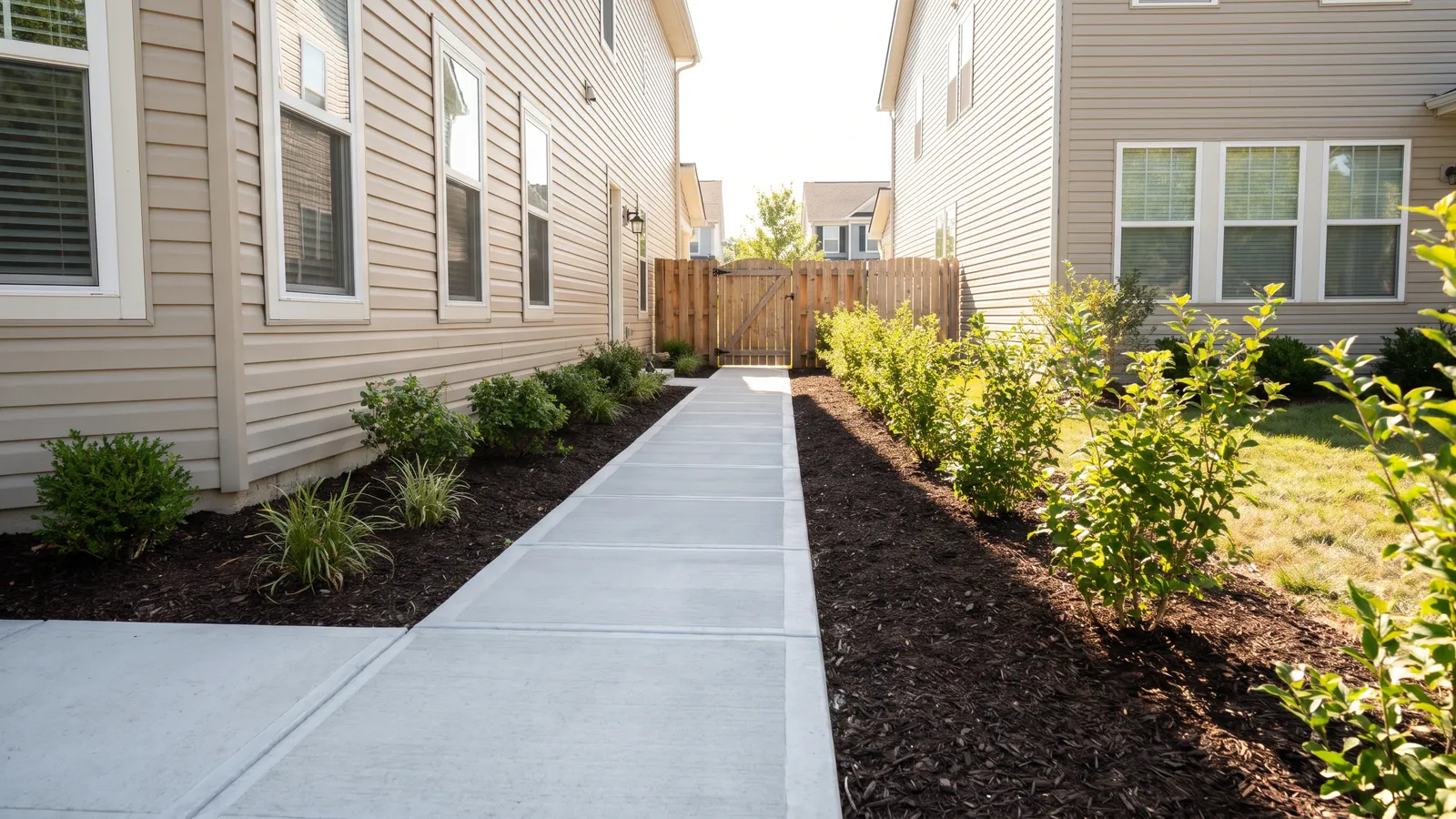
A new walk gets the same treatment as a driveway, scaled down. Topsoil out, firm clay found, stone base compacted, forms set to a width that two people can walk side by side on, and a gentle cross-slope so rain does not puddle. Curves are formed with bendable boards. Joints are tooled at regular spacing so cracks follow them, and the edges are rounded with an edging tool so they do not chip.
Roots are the long-term threat. Oaks, which Raleigh has in abundance, are a large share of root damage to sidewalks in published studies. A walk routed a little further from a trunk, or a joint placed where the root crosses, buys years. When a walk is being replaced because of a root, the contractor can tell you whether the root can be cut safely; that is a question for an arborist when the tree is large.
Public sidewalks along the street are a different case. They sit in the right-of-way, and work on them follows the town's rules and permits.
What the job covers
Route and width
Laid out from the drive or street to the door, wide enough to walk two abreast.
Base and forms
Firm subgrade, compacted stone, straight or curved forms.
Cross-slope
A slight pitch so rain sheds off the side.
Tooled joints and edges
Joints at regular spacing, edges rounded so they do not chip.
Steps tied in
Where the walk meets the porch, joined to new or existing steps.
Root-aware layout
Routed and jointed to give nearby trees room.
Walkway cost
| Item | Planning range | Notes |
|---|---|---|
| Plain concrete walk | $5 – $12 per sq ft | Raleigh slab range |
| Sidewalk section replacement | $1,300 – $2,600 | National range for a replacement job |
| Lifting a sunken 100 sq ft section | $300 – $600 (mudjacking) | Foam lifting $800 – $1,800 |
Planning ranges from published 2025–2026 cost guides, not quotes. Length, curves, steps and tear-out drive the price on your estimate.
On the job
Sidewalks and walkways: questions people ask
How wide should a front walk be?
Wide enough for two people side by side is the usual goal; a narrow walk feels like a path to a side door. The contractor will suggest a width that suits the house.
A root lifted one panel. Can you fix just that?
Often. One panel can be cut out and replaced, or a lifted edge ground down if it is small. Whether the root can be cut is a question for an arborist on a big tree.
Can the walk be curved?
Yes. Curved forms take longer to set, which shows up in the price, but they look softer against a lawn.
Who fixes the sidewalk along the street?
That sidewalk sits in the public right-of-way, and the town decides who repairs it and how. Ask the town first; any work there needs its permit.
Should I seal a walk?
Not required on a plain broom-finished walk. It helps against stains under trees.
Related: Concrete steps · Concrete repair · Repair cost
Free estimate: sidewalks and walkways
Name the job, give a phone number and the ZIP code of the property. A local concrete contractor comes out, measures, checks the slope and the ground, and writes the price down before anything is booked.
Estimates are free and there is no obligation to go ahead.