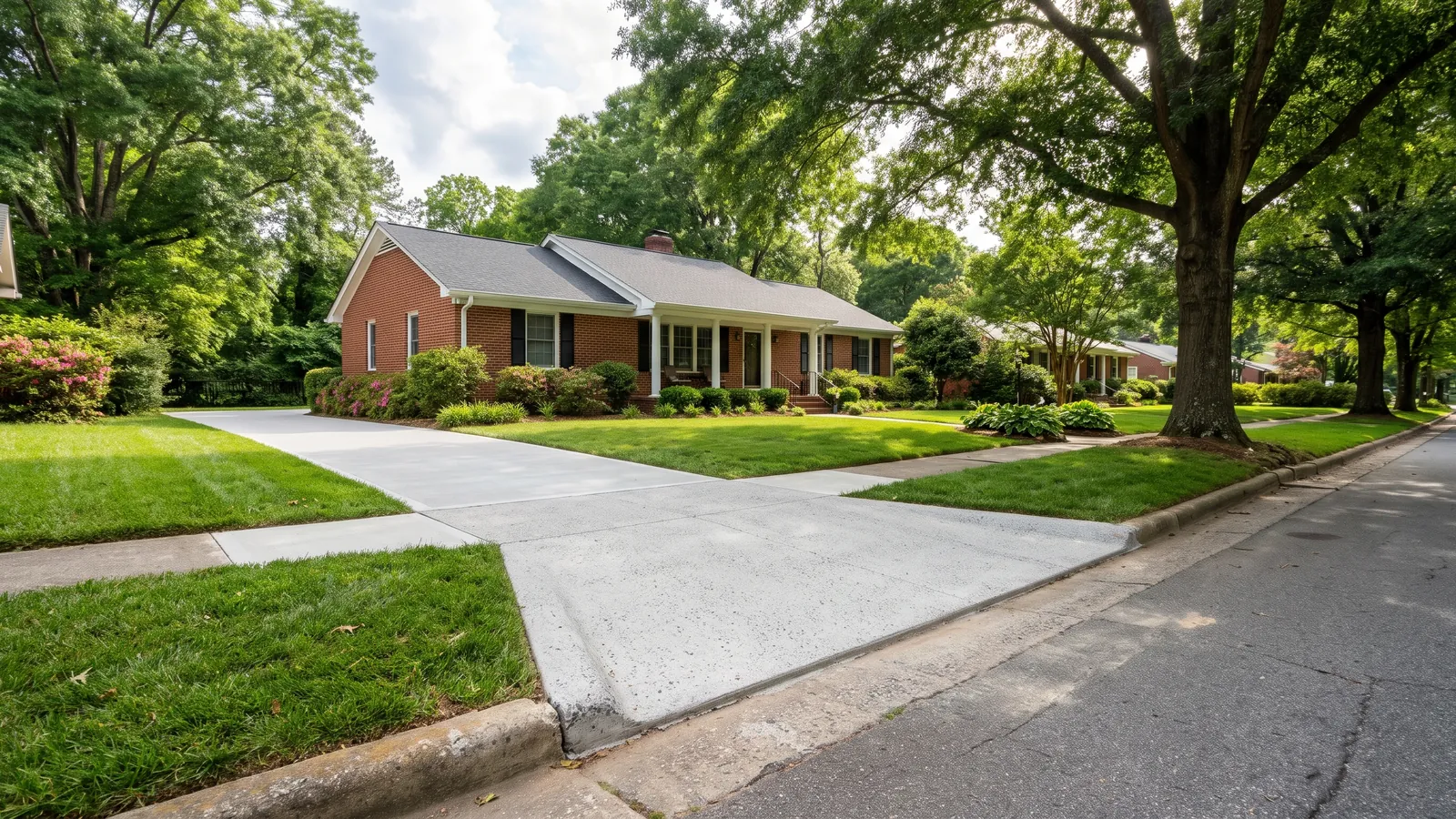
Driveway aprons at the curb, permitted and inspected before the concrete arrives
The apron is the few feet between your driveway and the street. In Raleigh it sits on public right-of-way, and the city has its own rules for it.
An apron takes the worst beating of any concrete on the lot. Every car turns on it, the street plow and the trash truck edge it, and water from the gutter runs across it. It is also, in most Raleigh neighborhoods, not on your property. The strip between the street and the sidewalk or property line is public right-of-way, and work there follows the city's rules rather than yours.
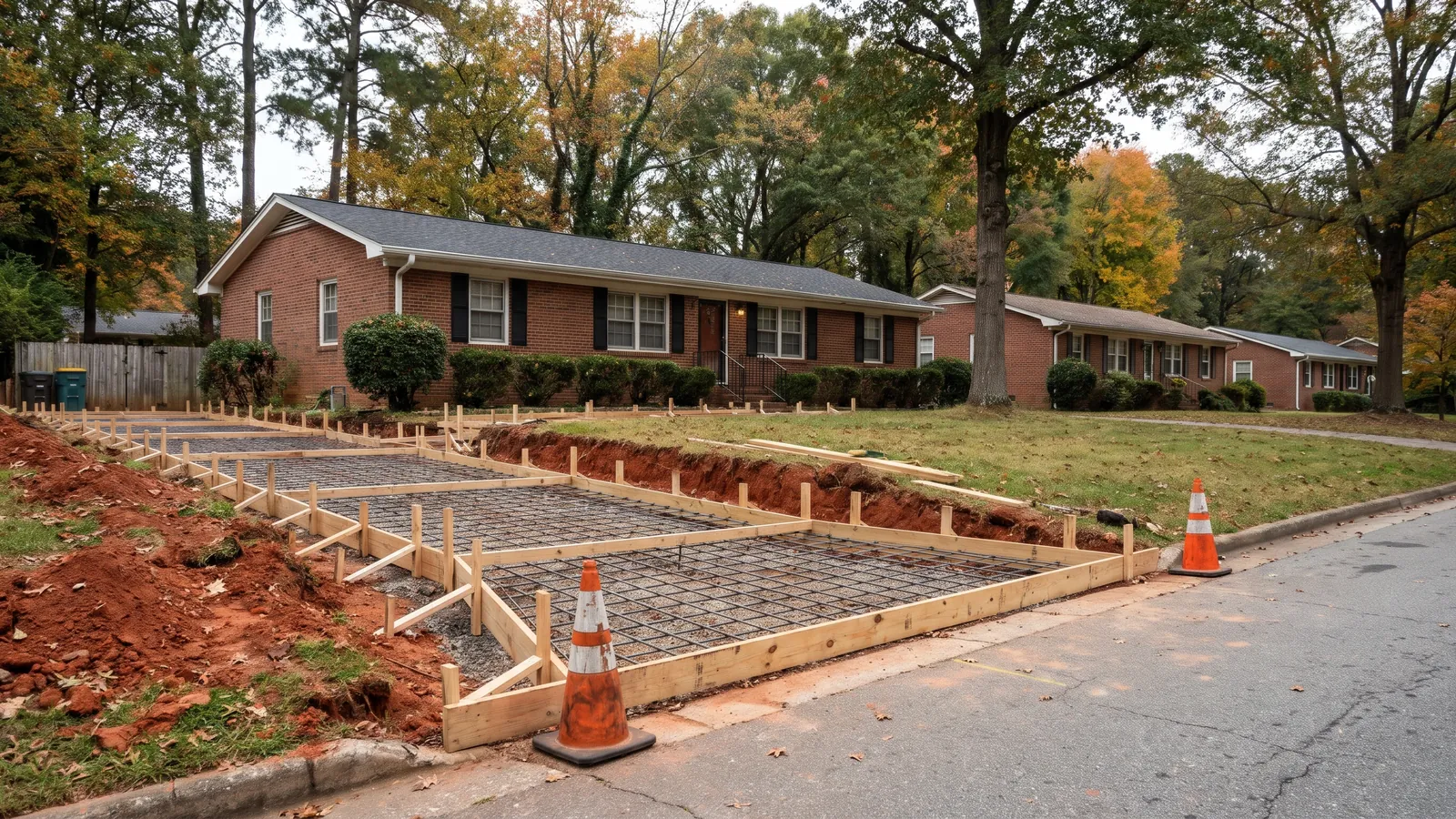
Those rules are specific. A right-of-way permit is required for work in the right-of-way or within five feet of it. The contractor doing the work must have a current performance bond of at least $5,000 and current general liability insurance on file with the city, or no permit is issued. The apron must follow Raleigh's transportation standard details and street design manual, gravel is not allowed in the right-of-way, and a pre-pour inspection of the right-of-way section has to be scheduled before any concrete goes in. Permits, comments and inspections all go through the city's Permit and Development Portal.
In practice that means an apron job has a waiting period built in. The contractor applies, the plan is reviewed, forms are set, the inspector looks at them, and only then is the pour booked. A good estimate tells you that up front instead of promising next Tuesday.
Outside the city, a street maintained by NCDOT has a different path: a driveway connection onto a state road usually needs an NCDOT driveway permit from the district office, which charges no application fee and takes about four weeks for a simple request. Existing single-family lots are often exempt, but the district decides. Cary, Wake Forest and the other towns have their own driveway permits too.
What the job covers
Permit paperwork
Right-of-way permit through the city portal, with the bond and insurance the city requires on file.
Standard details followed
Width, thickness and the curb cut built to the city's standard drawings.
Pre-pour inspection
Forms set and inspected before the concrete is ordered.
Tie-in to the drive
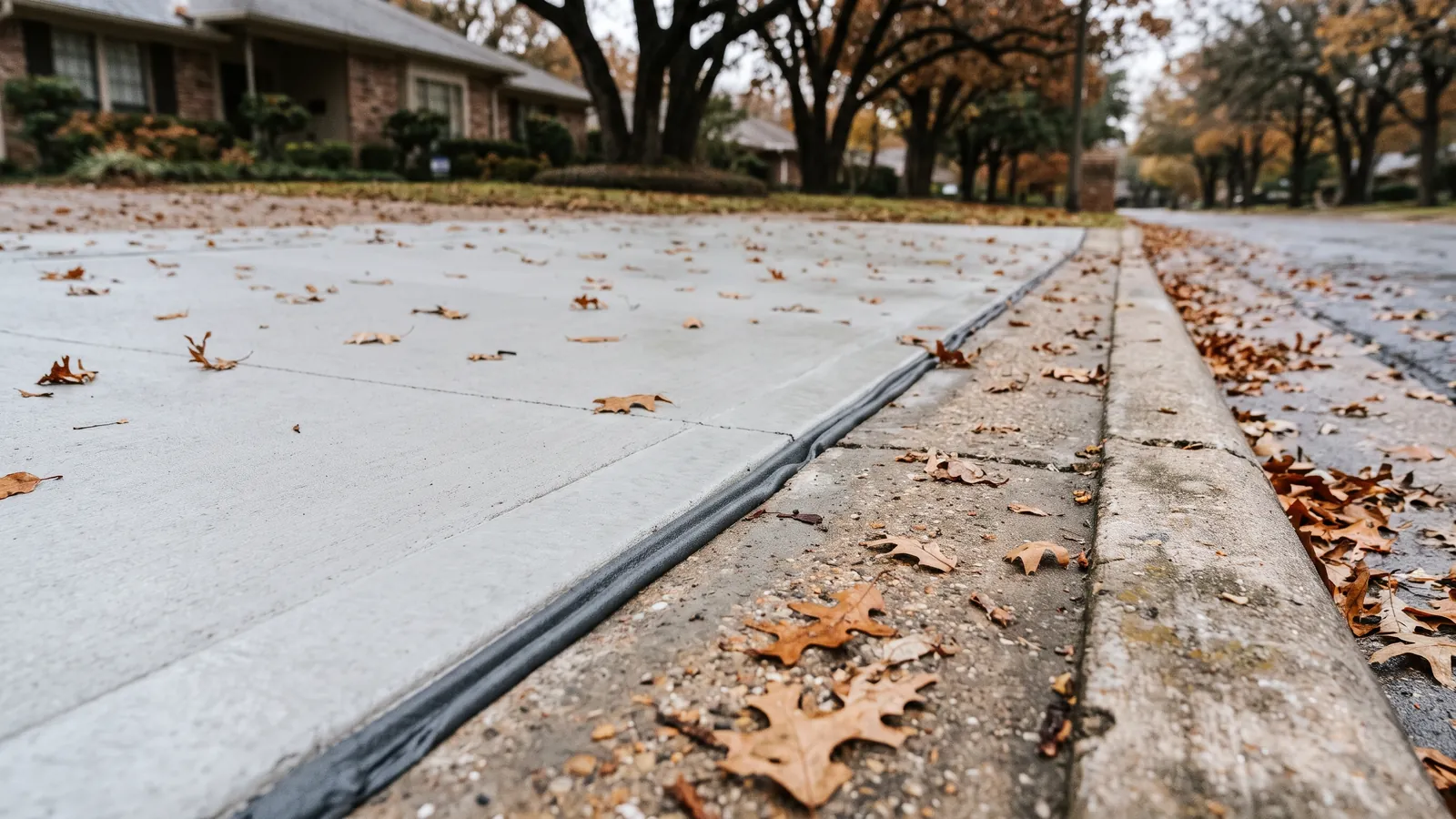
Joint between the apron and your driveway formed so the two can move separately.
Curb and gutter care
The curb cut done cleanly, without cracking the neighbor's section.
Traffic control
Cones and a clear lane while the street side is open.
How apron pricing works
No reliable public price range exists for aprons on their own; they are usually priced with the driveway behind them. What moves the number: the width of the curb cut, whether the old apron and curb have to be broken out, how much of the street edge is disturbed, the permit and plan review fees, and the extra trip for the inspection. The written estimate lists the permit work on its own line.
On the job
Driveway aprons: questions people ask
Is the apron my responsibility?
Usually you pay for it when the driveway is replaced or widened, even though it sits on public right-of-way. The city decides how it must be built.
Can I just replace my driveway and leave the apron?
Often, yes, if the apron is sound and you stop at the property line. A drive that changes width at the street will need a new apron and a permit.
Why does the inspection come before the pour?
Because once the concrete is in, nobody can check the forms, the thickness or the base. Raleigh requires the right-of-way section to be inspected first.
Can a homeowner pull the permit?
A homeowner acting as their own contractor can file Raleigh's Owner Exemption Affidavit for the property side. The right-of-way work still has bond and insurance rules, which is why most people let the contractor handle it.
What about a street that is not a city street?
NCDOT maintains public roads in unincorporated Wake County and some roads inside towns. A new connection to a state road usually needs an NCDOT driveway permit.
Related: Concrete driveways · Raleigh driveway permits · Sidewalks and walkways
Free estimate: driveway aprons
Name the job, give a phone number and the ZIP code of the property. A local concrete contractor comes out, measures, checks the slope and the ground, and writes the price down before anything is booked.
Estimates are free and there is no obligation to go ahead.